
A Family Friendly Look at the underside of society
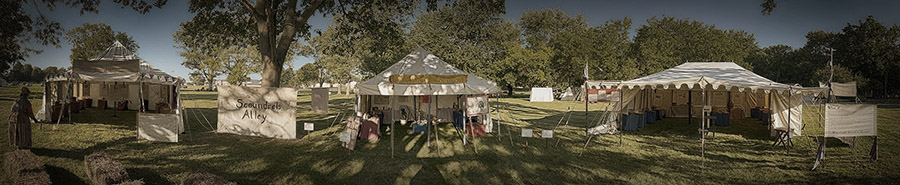
Scoundrel’s Alley Presents: The Scholarly Scoundrel on A Continuing Series of Thoughts Pertinent to Historical Scoundrels Everywhere.
For the Gypsies they and the Foul Disease have alike the Fate to run through a Geography of Names, and to be made free of as many Countries, as almost there are Languages to call them Names in;
-B.E., Gent., A new DICTIONARY of the Terms Ancient and Modern of the CANTING CREW. London, 1698
They have been called by many names over the centuries-vagabonds, rogues, maunders, beggars, thieves, tramps, vagrants, the list goes on. Gent points out that in France they were called ‘Bohemians’, in Italy ‘Zingari’, Spain ‘Itanos’. He goes on to explain that Holland has no beggars for ‘the Dutch themselves are…the greatest beggars in the world’, and Switzerland has no thieves for they are ‘…altogether soldiers, who are the greatest thieves in the world.’ Probably they are best remembered in the 16th-18th century England by the terms ‘Gypsy’ and ‘Canting Crews’. It would be impossible to discuss ‘Canting Crews’ and the language of ‘Cant’ without first addressing the term ‘Gypsy’. For that image, romanticized as it is conjures up images of wagons, fortune tellers, bright colorful clothing, exotic dancers, strange rituals, children stealing and-most importantly-the famous quote “even a man who is pure in heart and says his prayers by night, can turn to a wolf when the wolfsbane blooms, and the autumn moon is bright!” (The Wolfman. Dir. George Waggner, Universal Studios, 1941. Film) Fun it might be, but these people-actually the ‘Roma’ or ‘Romanichal’, seem to be more a victim of happenstance. For the arrival of this group to England, probably in the very early 16th century, was proceeded by the ‘Ancient Order of Rogues’, another of these loose groups of vagrants and vagabonds known as ‘Travellers’. In England this group called themselves Egyptians or the shortened ‘Gypsies’ and were known to darken their faces and skin, wear antique dress and spent the summer months. Gent will record this definition of ‘Gypsy’ in his dictionary: ‘a Counterfeit Brood of wandering Rogues and Wenches, herding together, and Living promiscuous or in common, under Hedges and in Barns…strolling up and down, and under colour of Fortune telling, Palmestry Physiognomy, and Cure of Diseases; impose all waies upon the unthinking Vulgar, and often Steal from them, whatever is not too Hot for their Fingers, or too Heavy to carry off.’ Using their own peculiar made up language that became known as ‘Cant’ to recognize each other, they were what would become known as ‘Canting Crews’. The Romanichal unfortunately were lumped in with these groups because of their wandering nature and clannish ways. Over time, the term ‘Gypsy’ will fall out of favor in the circle of rogues and scoundrels who will give up the practice of darkening their skin, but the damage to the Romanichal would be done and they would be forever saddled with the name ‘Gypsy’ and the reputation the Canting Crews had given it. PART I Although ‘B.E., Gent’ will publish in 1698 ‘A New Dictionary of the Terms Ancient and Modern of the Canting Crew, in its several Tribes’, considered the ‘first’ full dictionary of ‘slang’ language and the basis for all dictionaries dealing with the language of the criminal underground for the next 200 years, his was not the first writings-nor even the first collection of ‘Cant’ language-to have been published. Richard Head (1637-1686) will sometime later in his life publish ‘Villanies Discovered: OR THE DEVILS CABINET Broken Open, &’. In it he will speak of his travels in the countryside meeting and dealing with these ‘Canting Crews’, as well as giving lists of words they used, phrases, oaths to be taken in order to join the band and an outline of the ‘Ancient Order of Rogues’ of which he lists 17. (Other writers will list as many as 24). Head will spend much of his time writing from a moralistic point of view, showing the vagaries that lead to the downfall of good men, interspersing tales of woe with his warnings of places to avoid if one were of good moral character and intended to remain as such. In it he will also record a number of songs and poems that will become popular, showing the power and seduction of the ‘glamorous’ life of a free beggar, under no one’s power and free to come and go as one pleases. Until, of course, they are captured and hanged which Head takes into consideration by ending his discourse with warnings in the form of sayings and prose about the ‘evil Consequences which heavily wait on Lust and such exorbitant actions.’ Lanthorne and Candle-light. OR, the Bell-Mans second Nights-walke. was published in 1608 by the play rite Thomas Dekker, the best known of his 4 pamphlets wherein he wrote as a ‘Bellman’ or night watchman at the prison at Peckham. In it is a series of ‘conversations’ both overheard between as well as directly with the inmates. In addition, Dekker takes a historical viewpoint, going back to the Tower of Babel and the splitting of the languages. He will spend much time describing the language itself and how it was used, taking pains to point out the language itself ‘…retaine a certain salte, tasting of some wit and some Learning.’ He compares some of their words to their Latin roots: i.e. the cant word for cloak is ‘Togeman’, bread is ‘pannum’ and cheese ‘caseus’. In Latin, these three examples are ‘toga’, ‘panis’ and ‘caseus’. He has a small dictionary but its use is to show examples of how the phrasing is put together, rather than a definition of the words. Most of the pamphlet is given over to his descriptions of the rogues and how they will go about their particular vagaries. Caveat for Common Cursitors (1566) is the earliest published works and probably the most known due to the reprinting of it all the way up until 1811. While the author, one Thomas Harman references the older Fraternitye of Vacabondes (1561 by John Awdely but seemingly has not survived) he claimed to be taking much of his work from actual dealings with the characters he describes due to his being a Justice of the Peace and tax collector. The most notable parts of the Caveat is the first use of the word ‘Rogue’ as well as his taxonomy that will form the basis of our understanding of the ‘Ancient Order of Rogues’. Harmon is considered by scholars today an accepted sociologist of the time. It includes some small dictionary, phrasing and the earliest complete listing of rogues. PART II Harmon’s list of ‘Ancient Order of Rogues’-earliest ‘complete’ listing : Upright man: Leader, second only to ‘Great Tawney Prince in the crew. Tom of Bedlam (Bedlam Beggar or Abram Man): poorly but gaudily dressed, stealer of children clothing from the children. Also poultry and linens. Irish Toyle (Bawd Basket): Carrying pins, papers, chapbooks etc. under pretext of selling them so as to thieve instead of beg. Counterfeit Cranks: pretending sickness-usually ‘falling sickness’ (epilepsy) Demanders for Glimmer: begging women claiming to have lost everything to fire. Dommerar: beggars claiming to be deaf and dumb, often playing at being mad. Frater: beggar using false papers Whip jacket: counterfeit mariners claiming shipwreck, often with false papers Angler (Hooker) petty thief who uses a pole with an iron hook on the end to snatch things from baskets, out of store windows, etc. Jarkman/Patrico: counterfeiter and writer of false passes, often an unfrocked priest. Palliards: (also ‘Clapperdogeons’) born beggars. Prig(gers) of Prancers: riders of horses. (horse stealing) Rufflers: Sham soldiers using threats of violence in their begging. Drunken Tinker Swadler/Pedlar: Often runaway or ex soldiers, used to ‘enforce’ or sent on specific violent jobs. Usually binding their victims then rob, beat, maim and often kill. Rogue/Wild Rogue: Professional beggar. A ‘Wild Rogue’ is a Palliard. Autem Mort: Woman (mort) married in a church (Autem-having to do with church) usually clothing thieves. By late 18th century the term is synonymous with prostitute. Dell: young girl usually (or claiming to be) virginal. 18th century a ‘common wench’. Doxie: mistress or prostitute who claim they are not. Walking Mort: tramp beggar woman. Kinching Mort Little girls brought up to thieve. Kinching Cove: Little boys brought up to beg.
By the time of the 18t century, these ‘Ancient Order of Rogues’ will expand out and add to their group-some, such as the ‘Great Tawney Prince’ will fit heavily into the hierarchy, others like the ‘Adam Tylers’ more an afterthought. The following are but a few of this large cast of characters. Great Tawney Prince: Leader of the ‘crew’, often not a beggar themselves but the one who decides where to beg, how to beg, divvies up the ‘take’ and settles disputes. Fence: Receiver/reseller of stolen goods. Adam Tyler: Street children-not necessarily in the ‘crew’ that the Irish Toyle will use to run stolen property to the ‘Stalling Ken’ where the Fence resells the items. Diver: A pick pocket. The name derives from stiffening the fingers and ‘diving’ into any pocket or pouch available and grasping whatever comes in contact with them. Faulkner: A ‘shower of small tricks’, usually to keep a person’s attention while the Diver does their work. Sharper: Not a ‘beggar’ but a ‘street hustler’ usually cheating at ‘games of chance’. Late a ‘card sharp’. PART III The language itself was not necessarily a ‘made up’ language. Often it was simply a different meaning to common word-such as ‘cheat’ in ‘cant’ means ‘thing’. More often than not it was taking common words but put together in a way that was intended to fool others into thinking that the speaker was ‘quite mad’ as they might have put it. Using the ‘cant’ word for ‘thing’-cheat-with another common word-nap (an old common word referring to ones head) and we have ‘nab-cheat’. Literally a ‘head thing’ or what to a ‘canter’ is a hat. But it did identify each other as being part of a ‘crew’ and not just some ‘tatterdemillion’ (poorly dressed, wretched man) who was just what he seemed. It was as much a ‘descriptive’ language as anything. For instance, one might hear the phrase ‘do not turn cat in pan’. The phrase itself to a common listener means nothing. To someone in the ‘Cant’ know, it brings up an image of a cat in a hot pan, turning and twisting anyway they can to escape the heat and get away. That image sends a warning: if you get caught, don’t start saying or doing anything just to get away. ‘Cackling cheat’ is a ‘cackling thing’- a chicken. To ‘play least in sight’ is to run away and hide. ’Blind man’s holiday’ would have not just the blind groping, but everyone. So, its meaning is a very dark, moonless night where everyone gropes around and no-one works. A holiday. Even individual words-lightmans and darkmans for example-are just descriptive in nature. Lightmans-day. Darkmans-night. ‘Throw the bones’, another phrase still in use at gambling casinos and back alley crap games is another of our carryovers. For ‘bones’ were dice-usually made from bone or horn-and throwing them was simply tossing them. This differentiated itself from ‘rattling the tats’, in that ‘rattling’ was a term used to indicate some secret maneuver and ‘tats’ referred to dice or die modified (loaded) to show a predetermined amount. If, that is, they could be ‘rattled’ properly. Among it’s other attributes, ‘Cant’-specifically ‘Thieves Cant’-as a language survives today not only in the criminal underground, but in our modern, everyday speech. Herein follows a short list of those words that found their way out of the Canting Crews and have survived today, hidden in plain sight! Drawers: Hosen, then stockings, later undergarments now long pants Lick: To beat in a fight Thrash: To beat severely Stow You (Stow It): keep quiet, stop talking Filch: To steal, usually a small item Shoplift: Steal from a store Gypsy: Roma people, also vagabond or free spirit Transmogrify: Change or Alter Double Cross: to turn on someone trusting Tidbit (Titbit): small girl child, later any small delicate morsel Snigger (Snicker): ill suppressed laughter We also see this language carry over into people and then into the arts. ‘Jenny Diver’ was at first the generic name of a female pickpocket-because they ‘dove’ into the pockets of the unsuspecting, hooking their fingers around whatever was there and pulling it out. Later it will be the well known nickname of Mary Young, a leader of a crew dedicated to pickpocketing and shoplifting. Mary would be the real-life model for the character of Jenny Diver in John Gay’s ‘Beggars Opera’. PART IV These people as a whole were an amoral bunch, but with a code of conduct between themselves that stands at odds with their position in society. At night they would gather at whatever barn or haystack or abandoned house or backroom or hedgerow they could find, and after the Upright Man dolled out the days take, they ate and drank in communal bliss, drifting off with whomever they chose until the next day when they would part, wandering in their vagaries until meeting up together again. It was not uncommon tho to find them almost ‘Robin Hood’ in some of their dealings. When begging they would procure money, drink and food. The money got spent, the food got drunk and much of the food was left for local widows and orphans who were themselves starving. Whether this was out of compassion or the desire not to have more ‘competition’ in the begging is debatable. Between themselves they also had a strict code. When, in 1745 Bamphylde Moore-Carew, the self-proclaimed ‘King of the Beggars’ published his aptly-named biography The Life and Adventures of Bampfylde Moore-Carew, he spends a number of pages describing the deathbed ‘orders’ of his predecessor, Clause Patch. In it Patch leaves certain instructions on not only how to beg, who to beg from, how much you should expect to get but ‘…remembering social virtue is the next duty and tell your next friend where he may go and obtain the same relief by the same means.’ There may not be ‘honor among thieves’, but there WAS ‘honor among beggars’. At least in the Canting Crew! PART: The End While America did not see a lot of the ‘Canting Crews’ per say, that is not to say that they were not here. Both Moore-Carew and Mary Webb would be transported to the colonies, but both would find it difficult to continue their work as it was known in England. There just were not enough people to hide in and not enough of anything to beg or steal at the level they were used to in England. Both would end up returning early to England. Both would be recaptured and transported a second time. Both would once again return early to England. Moore-Carew to a life of leisure to write of his adventures, Webb to be captured a third time and executed. What America WILL see was a different type of ‘Canting Crew’-the rise of gamblers, sharpers and what is often known as ‘confidence men’ or simply ‘con men’. Only but one of these we shall mention here-‘Canada’ Bill Jones. Born in Yorkshire to a canting crew-an actual Romanichal family, he immigrated to Canada and finally made it into the United States and became one of the greatest con men gamblers in American history. So great was his skill that at his death, John Quinn will write in Fools of Fortune about his funeral that ‘…as the coffin was being lowered into the grave, one of his friends offered to bet $1,000 to $500.00 that ‘Bill’ was not in the box’. The offer found no takers…’ But that is for another time.
-‘Scoundrel’s Alley’ is the collaboration of Faire Wynds Entertainments and Parson John Living History. The ‘Scholarly Scoundrel’ is Eric Paul Scites (1962-2023)